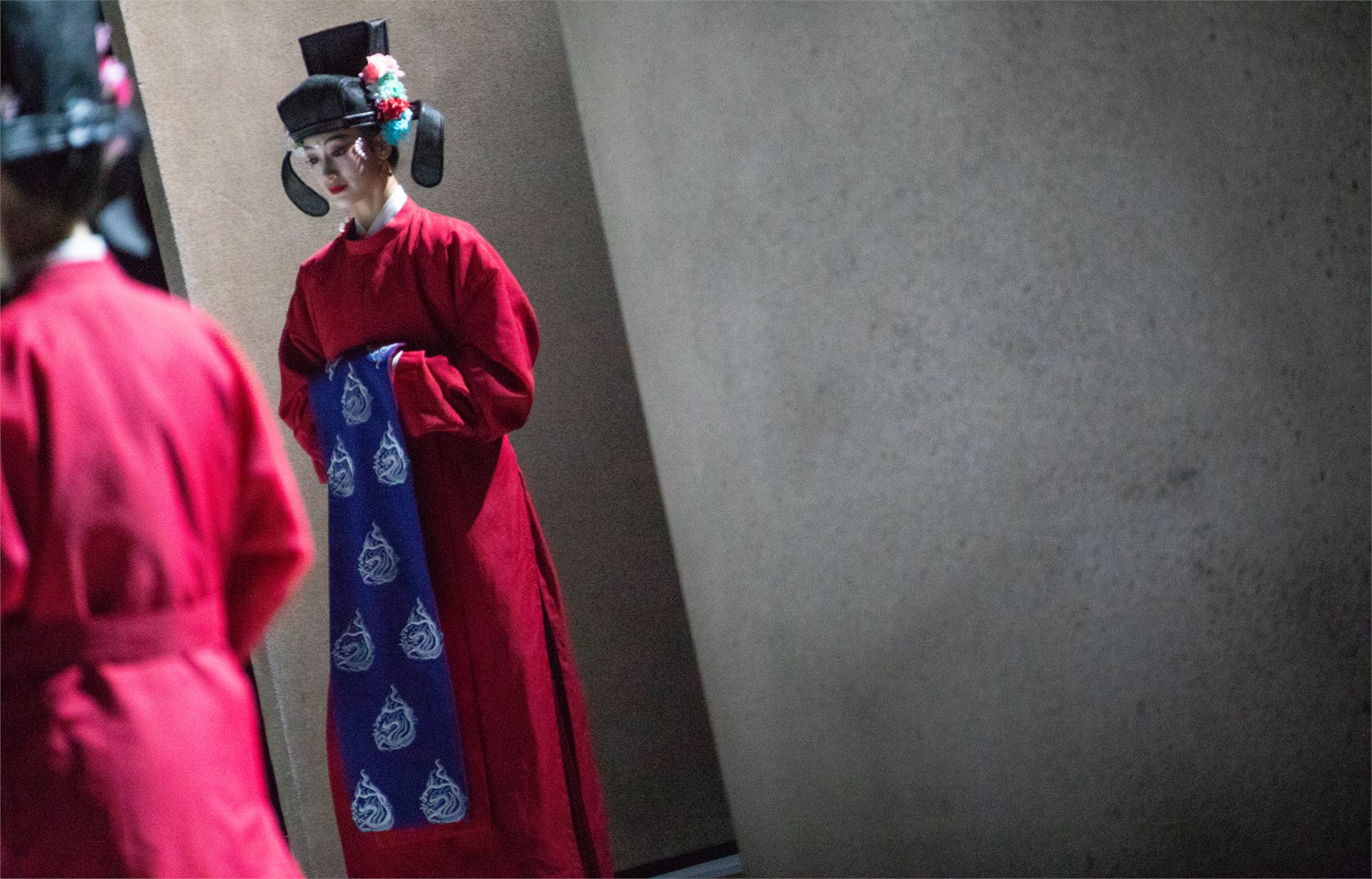
这页只关注一件事:空间、音乐、衣料、色彩、妆造与灯光如何彼此牵引,最终汇成舞台独有的气质。This page asks how the production's atmosphere grows from relations among space, score, fabric, colour, hair and makeup, and light.
舞台如何展开An Unfolding Stage
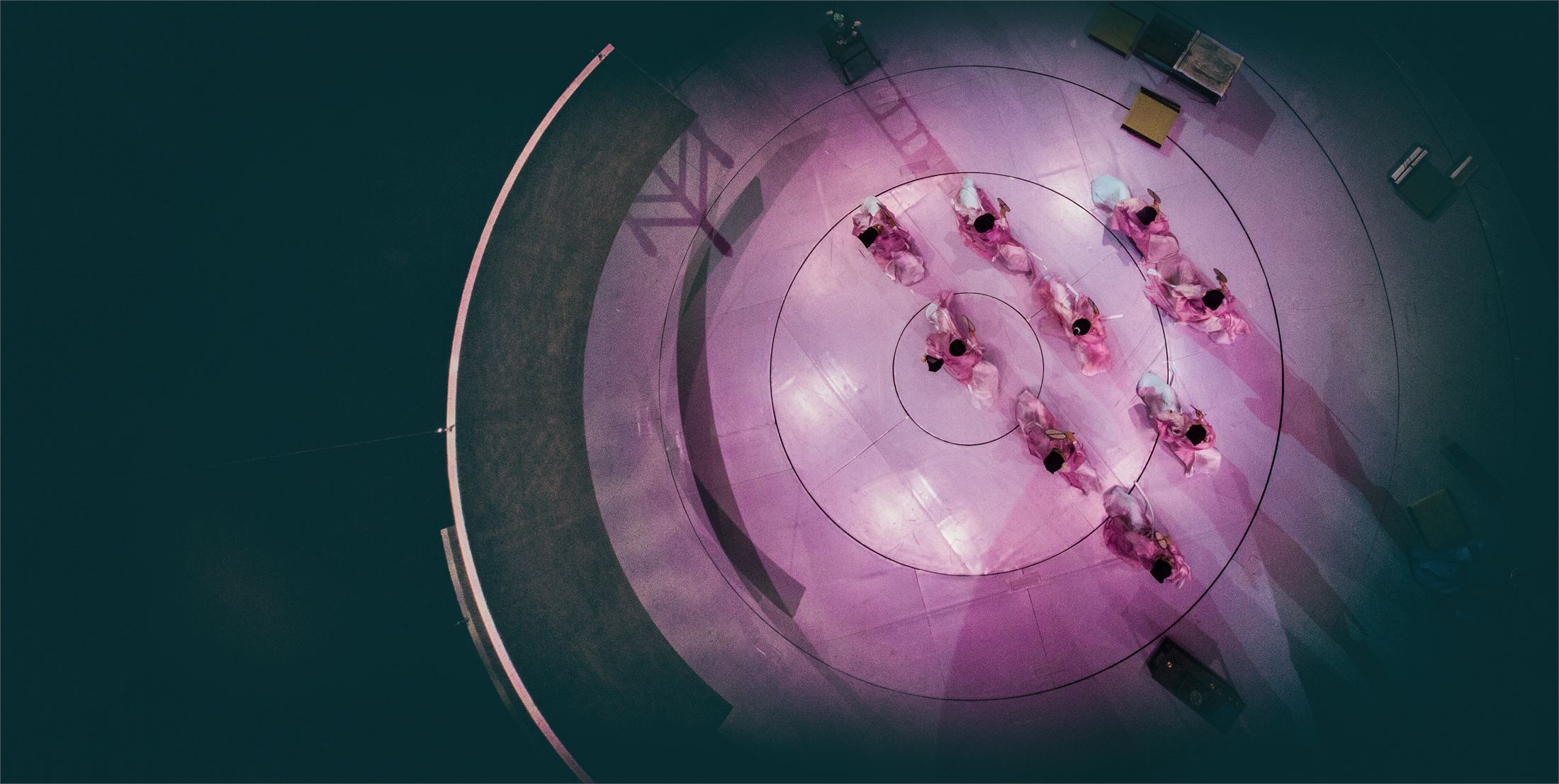
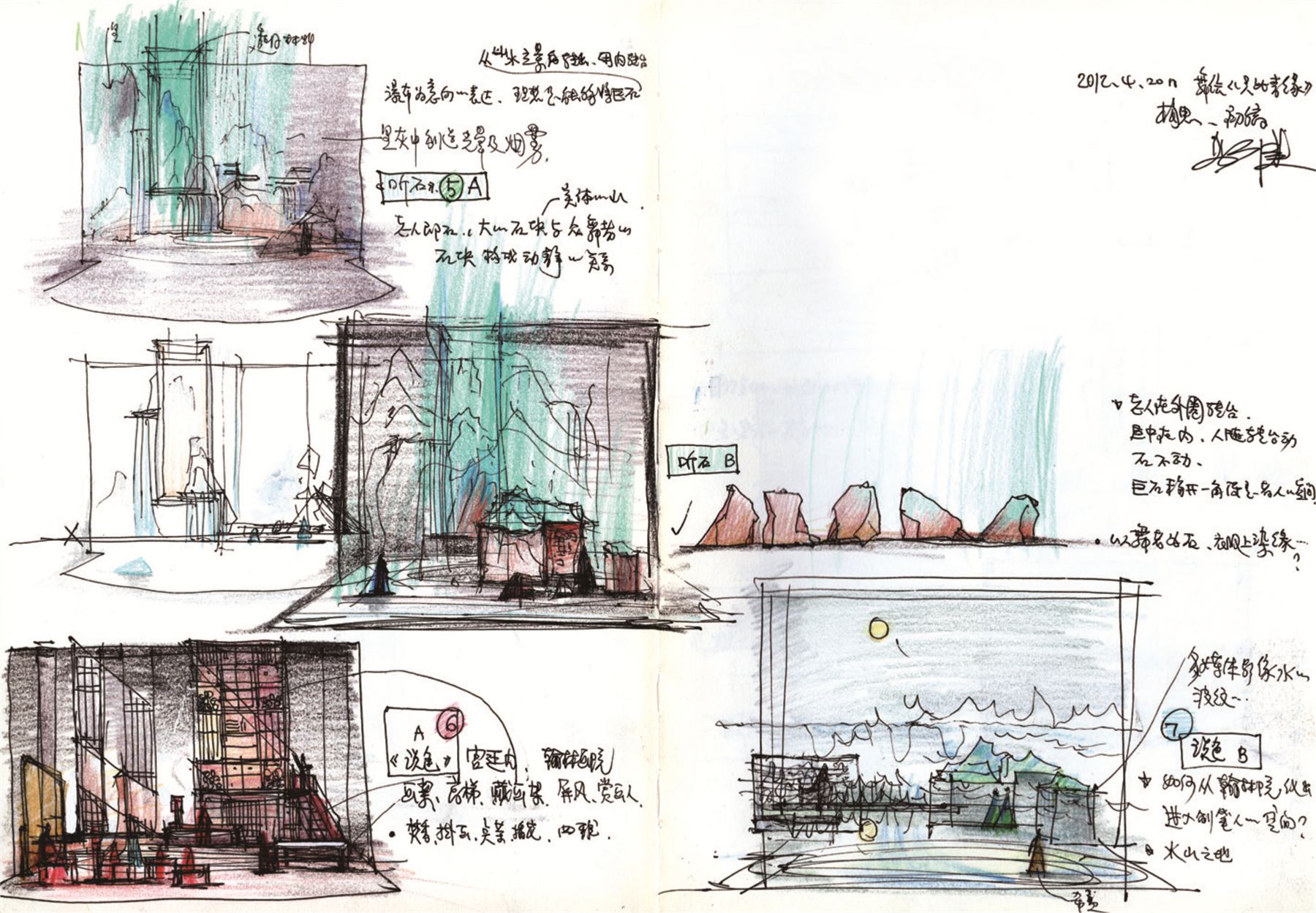
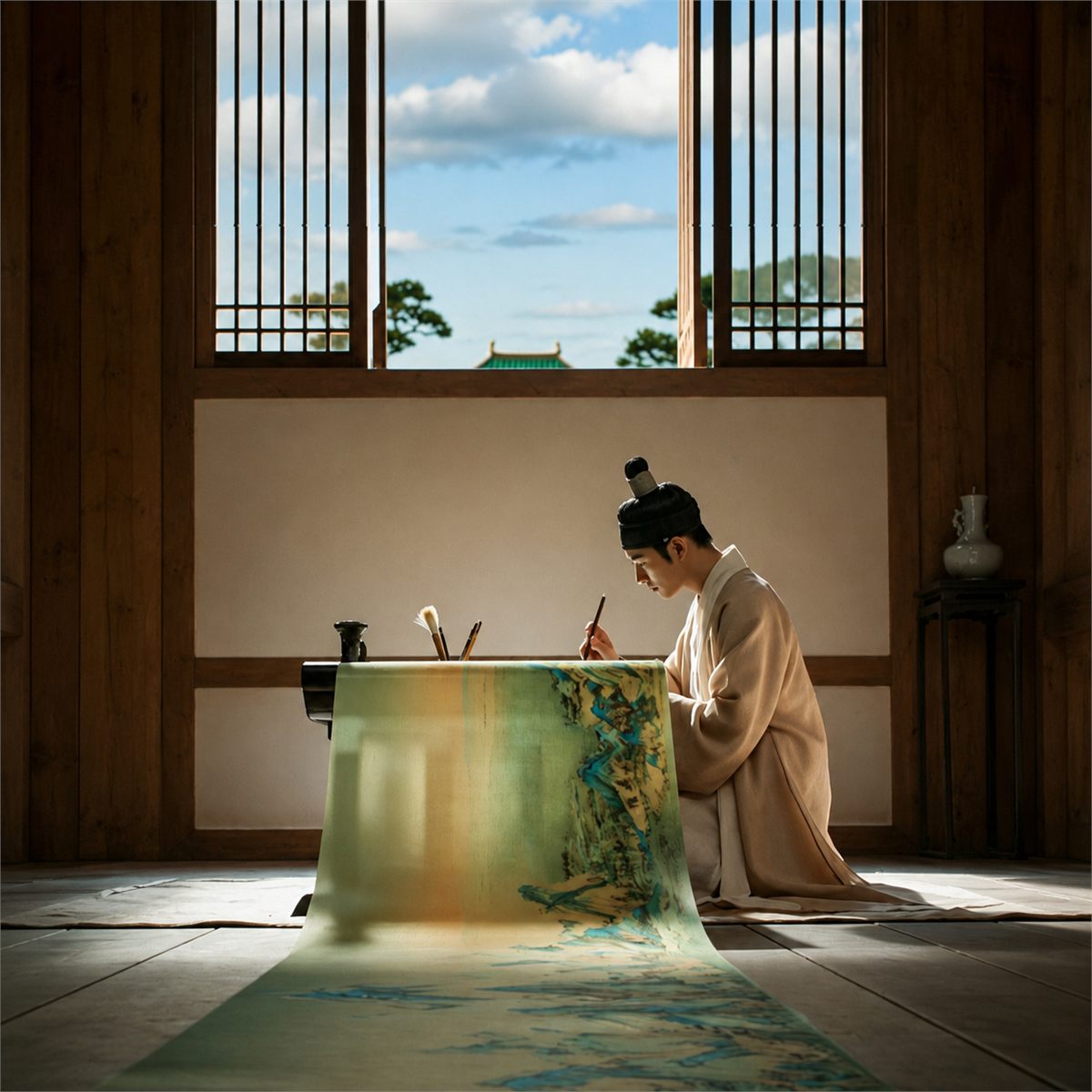
舞台没有把《千里江山图》放大成布景,而是抓住“展卷”这一动作:板块旋转、错位、开合,空间像长卷一样不断改变观看的位置。创作最在意的是连续——转场不能把画面切碎,而要像水一样流过去,让机械、演员与光共同维持一条不断裂的运动。The stage does not enlarge A Thousand Li of Rivers and Mountains into scenery. It takes its cue from the act of unfolding: stage panels rotate, overlap and part, continually changing where and how the audience sees. The governing principle is continuity. Transitions must not fracture the image into separate scenes; stage machinery, performers and light carry the motion forward like water.
观众面对的不是一张已经展开的画,而是一幅正在发生的空间。What the audience encounters is not a picture already opened, but a space still in the act of unfolding.
给山水留出空气Room to Breathe
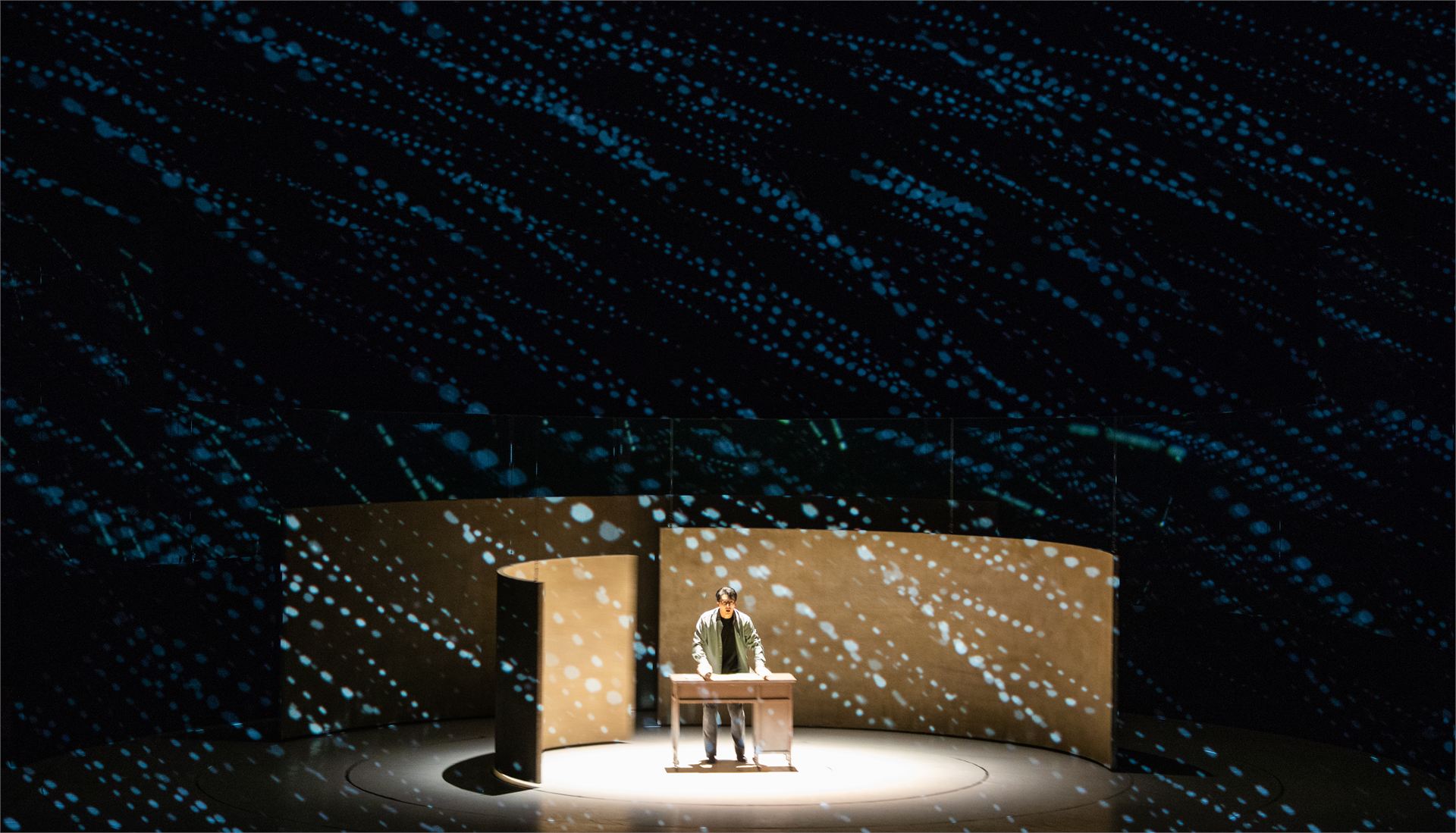
舞台最容易失去的,往往不是景,而是空气。板块、桌椅、影像一旦塞得太满,山水的远近会被挤平,人物也会开始与环境争夺注意力。A stage can lose air before it loses scenery. When planes, furniture and images accumulate, distance collapses and the body begins to compete with its surroundings.
创作因此反复撤去多余的东西,不是为了追求“极简”,而是让黑暗重新有深度,让一个身体站在空处仍然成立,也让目光有地方走向远方。
真正的减法,不是更少,而是让留下来的每一样东西彼此有余地。The production kept clearing space — not in pursuit of minimalism, but so darkness
could recover depth, a single body could hold an open stage, and the eye could travel.
The point of
subtraction is not less. It is room.
音乐与身体共享时值Score and Choreography
在《只此青绿》里,音乐并不只是为动作伴奏,舞蹈也不负责把音乐逐拍翻译成身体。两者共同占有时间,却不必时时同拍。In The Journey, the music does not sit beneath the choreography as accompaniment, and movement does not simply visualise the score. They share time without having to share every beat.
有时,节奏推动身体前行;有时,声音仍在延展,身体却反而收束、放缓。古琴、古筝等传统乐器同样可以形成清晰而有力的节奏,并不只是为了营造所谓“古意”。高潮处尤其如此:音乐越满,身体越慢;声音向前推进,动作却将时间拉长。真正的张力,往往产生在这两种时间彼此牵引、却并不完全重合的瞬间。Rhythm may propel the body through space; sound may keep intensifying while movement slows; guqin and zheng can carry incisive rhythmic force rather than serve as shorthand for antiquity. At the climax the relation is especially clear: the music grows fuller as the body grows slower. Sound presses forward; movement lengthens the instant. Their tension lives in the time between them.
衣料不是身体的外壳Costume as Moving Material
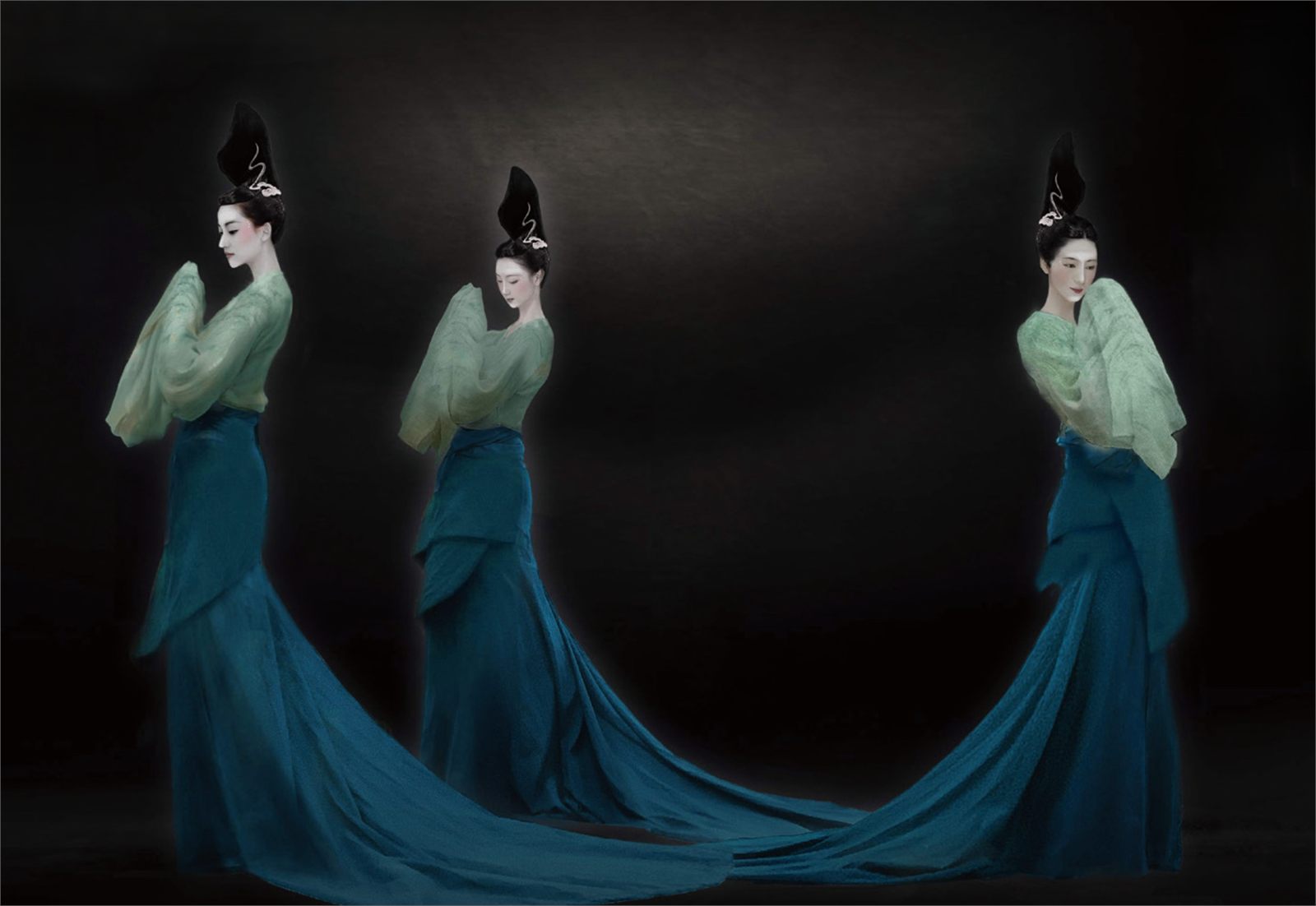
服装一进入舞蹈,就不再只是造型,而成为运动条件。裙摆的重量、垂坠与展开幅度,会改变旋转中衣料的滞后、展开与回落;腰背剪裁要让服装在大幅后倾时仍服从躯干线,而不是在关节处堆折或牵扯;袖与裙片的长度,则会延长或收束一个动作留下的视觉尾迹。Once costume enters dance, it becomes part of the movement system rather than something merely worn over the body. Fabric affects weight, delay, rebound and the length of a visible line. The production therefore tested well over a hundred textiles in the course of development. For Qinglü alone, more than ten candidates were tried before colour, weight, drape and response to light began to align with the choreography.
为这部作品寻找一种不依赖装饰纹样、而由纤维、垂坠与染色本身建立的中国舞台质感,服装团队曾在广州反复试料。他们没有沿用此前作品中较多使用的丝绒,而是在麻质织物、丝绸与缎面之间反复打样;画中“小白人”的白衣,则以真丝与棉麻类面料搭配。厚薄、挺括、垂坠和受光方式不同,色彩、动作的视觉速度与身体轮廓也会随之改变。
这些材料并不是“中国风”的标签。只有当纤维、染色、动作与光彼此作用,衣料才真正成为舞蹈的一部分。The search was also cultural rather than simply technical. Instead of relying on
velvet, a material used prominently in some earlier productions, the team worked with ma (麻) fabrics — a
broad family of bast-fibre textiles — alongside silks and satin-faced textiles, testing how each took
blue-green dye, responded to light and moved with the body. For the pale figures drawn from the tiny
inhabitants of the scroll, traditional silk and cotton-and-ma fabrics were combined to keep the image
light without losing material presence.
灯光下的青绿Qinglü Under Light
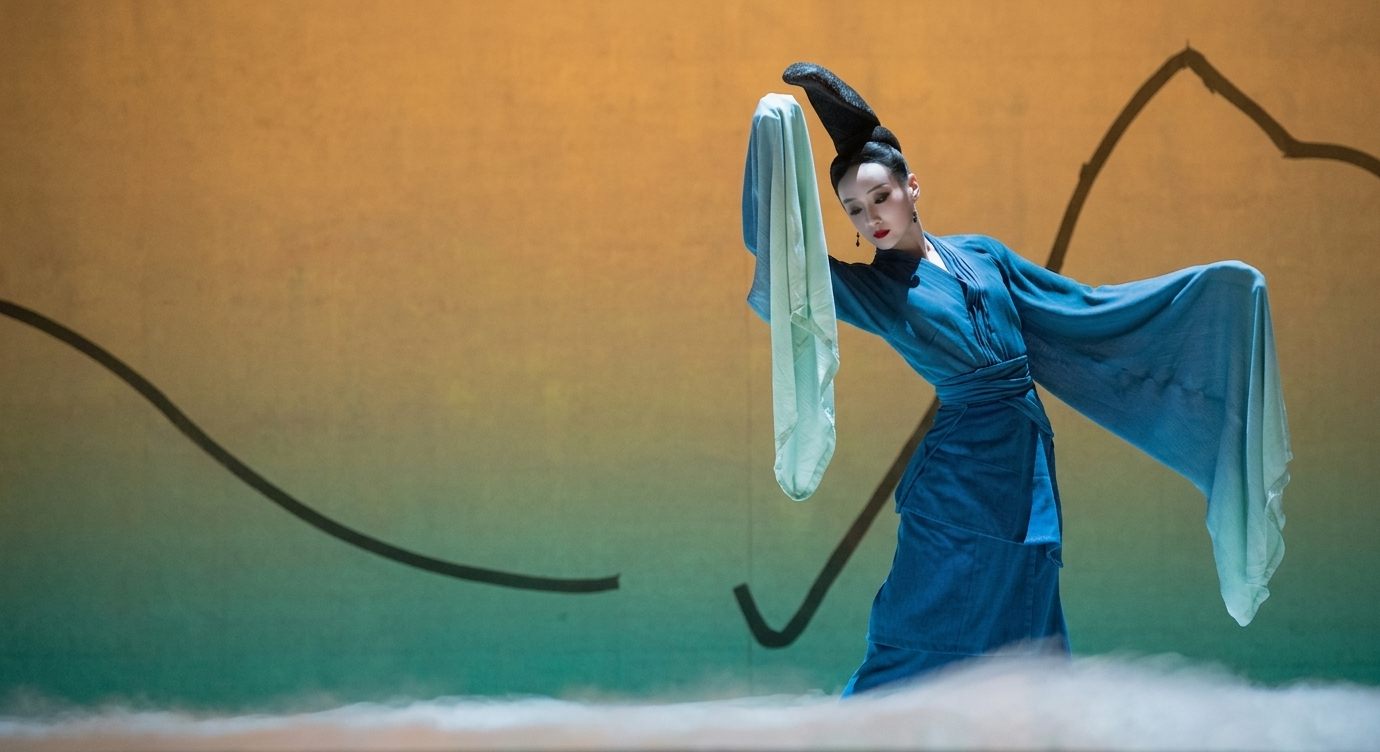
创作团队曾为青绿反复试验不同面料。真正要找的并不是“最像画”的一种绿,因为舞台上的颜色从来不是固定色样:纤维如何反光、布料怎样垂坠、灯具的色温与角度、舞者离观众多远,都在改变眼睛最终得到的颜色。Qinglü’s colour was not built by copying the scroll’s mineral blues and greens onto fabric. Onstage, colour is never a fixed swatch: fibre, drape, angle and temperature of light, movement and distance all alter what the eye receives.
最终的青绿还必须与《千里江山图》本身的色彩逻辑保持关系:不是把石青、石绿复制到衣服上,而是在明艳与克制之间找到比例。颜色要保留青绿山水的层次与光感,却不能脱离身体单独成为“主角”。
青绿因此没有一个孤立的“正确色值”。它发生在染色、纤维、身体与光的相遇里:不是从画上取下一块颜色,而是在剧场里重新获得深浅、温度与呼吸。The aim was not “the green closest to the painting,” but a blue-green with depth
and clarity that could remain vivid without detaching itself from the body. Qinglü therefore has no
single correct colour value. It happens in the meeting of dye, fibre, body and light.
舞台上的面容The Face from a Distance
在剧场里,你先看到的往往不是眉眼,而是一道轮廓。距离暂时拿走细节,也把真正重要的比例留下:眉线的走势、发髻的高度、簪花的重心、领口与颈项之间的关系。等人物靠近,细节才慢慢出现。From the back of a theatre, a face first arrives as structure: the line of the brow, the height of the coiffure, the placement of floral ornaments, the clarity of the jawline. Detail matters, but only when it survives distance.
“远山眉
/
远山黛”的名称与意象早于宋代,宋人眉式本来也并非一种。舞台上的细长眉线因此不是“宋代原样”,而是今天的造型设计从更长的妆饰传统与宋代人物图像中提炼出的轮廓。
簪花在宋代图像与仪容文化中确有丰富例证,形制却随身份、性别与场合变化,也不存在一套可以直接复制的“宋代标准造型”。
《只此青绿》借来的不是古人的面孔,而是线条、比例与气度。历史研究给创作边界,也给创作自由:知道什么来自过去,才更清楚什么必须由今天完成。The production’s long, fine brow line is not presented as a literal reconstruction
of Song makeup: the term yuanshan mei (远山眉, “distant-mountain brow”) predates the Song, and Song brow
styles were not uniform.
Floral hair ornaments are richly attested in Song visual culture, but
their forms varied with status, gender and occasion. The Journey borrows line, proportion and bearing
rather than an ancient face.
光、月与时间Light, Moon, Time
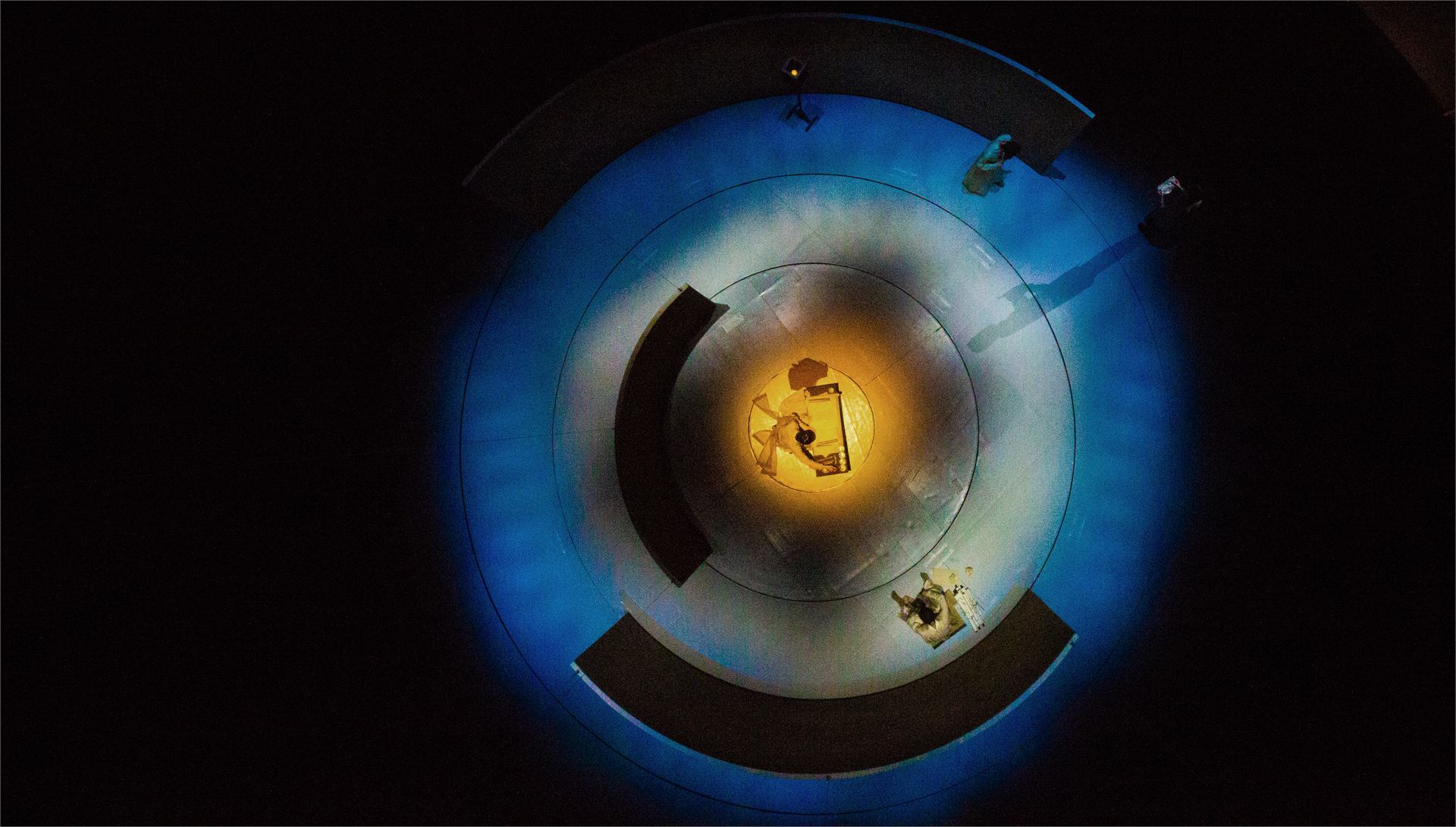
移动舞台不断改变空间,灯光必须与板块、演员和音乐精确相遇。早一秒,结构会被提前揭开;晚一秒,人物与空间之间最准确的关系已经过去。Light has to be precisely timed with the moving stage, performers and score: a second too early can reveal a structure before it should be seen; a second too late can miss the relation it was meant to make visible.
月亮的意象贯穿全剧,却不总以一轮完整圆月出现。它有时只是圆形光域,一段弧线,或被结构遮去一部分的圆意;四层同心圆转台与上方卷轴结构的旋转,也让“圆”不断出现、隐去、重组。
对熟悉中国诗歌的人,月亮从来不只是夜景。它常把时间、距离、离别与相望放进同一个意象里。主创在创作中反复想到张若虚的“江畔何人初见月?江月何年初照人?”——人在改变,朝代在改变,月亮却给不同年代的目光留下同一个方向。
所以,希孟、展卷人与今天的观众并不需要被写成“跨越千年终于相见”。九百多年仍在那里。月光没有把时间抹平,只让分离的目光,短暂地朝向同一处。The moon runs through the work without always appearing as a complete disc. It may
be a circular field of light, an arc, or a form partly hidden by the stage structure. In Chinese poetry,
the moon has long held several experiences at once: time, distance, parting and the possibility that
people separated by place or era may still look toward the same light. Zhang Ruoxu’s question in A
Moonlit Night on the Spring River — “Who first saw the moon above the river? When did the river moon
first shine upon humankind?” — turns looking at the moon into a question about human life inside a time
far larger than one lifetime.
The production’s moon belongs to that field of meaning. It does not
erase the centuries between Ximeng, the Scroll Keeper and the audience. It gives their separate gazes a
common direction. Moonlight does not flatten time; it allows distant eyes, briefly, to look toward the
same place.
舞台在同一瞬间出现The Stage in One Instant
舞台从不把空间、音乐、衣料、颜色、妆造与光分开交给观众。Space, score, fabric, colour, hair and makeup, and light never arrive separately.
它们只有在同一瞬间彼此成全,作品才真正出现。The work exists only when they hold one another in the same instant.